
When you hear the word testosterone, chances are you think of men. Muscle. Facial hair. A deep voice. Maybe even a little aggression.
But testosterone isn’t a “male hormone.”
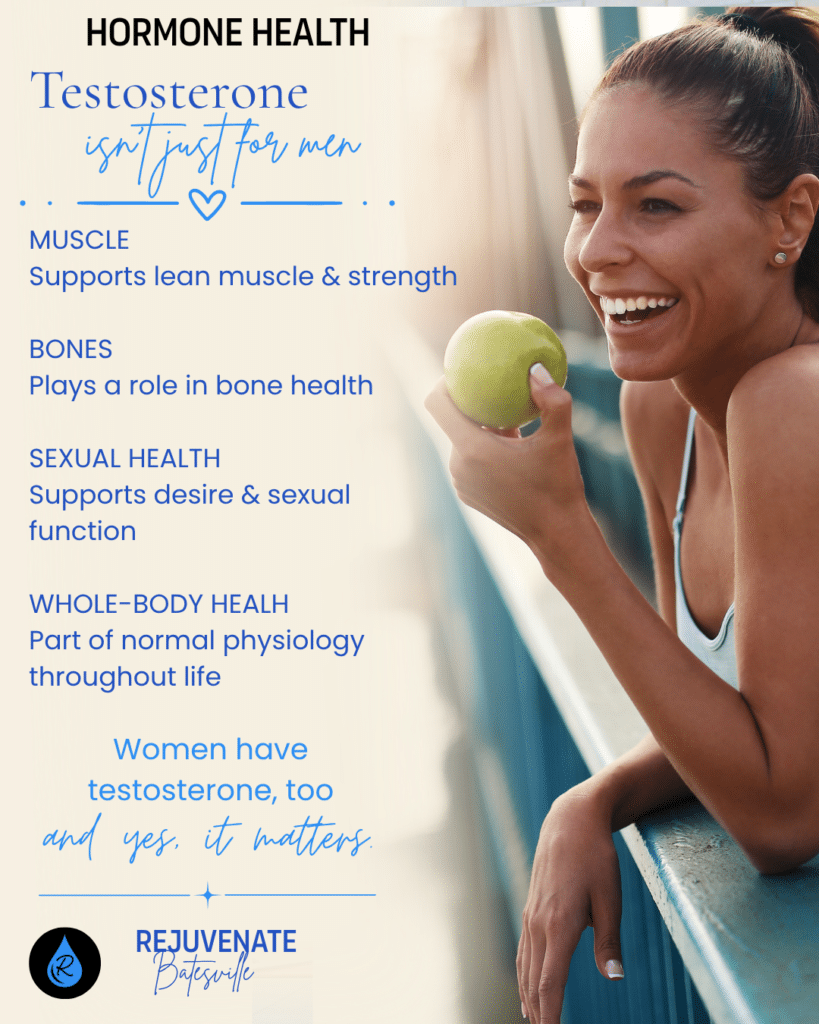
Women have testosterone, too—and it plays an important role in both male and female health.
Men typically have much higher levels, but the amount of a hormone in the body doesn’t determine whether it matters. Testosterone has effects throughout the body, from muscle and bone to sexual function.
So, what exactly does testosterone do?
What Is Testosterone?
Testosterone is an androgen—a type of sex hormone naturally produced by both men and women.
In men, most testosterone is produced by the testes, with a smaller contribution from the adrenal glands.
Women produce much smaller amounts through the ovaries and adrenal glands, and some testosterone is also created when other hormones are converted within the body.
The amount may be different, but testosterone is normal female physiology, too.
Wait… Women Have Testosterone?
Absolutely.
Estrogen tends to get most of the attention when we talk about women’s hormones, but it isn’t working alone. Women have estrogen, progesterone, and testosterone, along with many other hormones that work together throughout the body.
Testosterone contributes to several aspects of female health, including:
- Sexual desire and arousal
- Muscle and lean body mass
- Bone health
- Normal sexual function
- Overall physical function and well-being
And just like other hormones, testosterone levels and androgen activity can change throughout a woman’s life.
That doesn’t mean every symptom a woman experiences is caused by low testosterone—or that testosterone is the answer for everyone. Fatigue, changes in libido, difficulty building muscle, mood changes, and changes in body composition can have many different causes.
Hormones are one piece of a much bigger picture.
What Does Testosterone Do for Men?
Testosterone has many of the same fundamental roles in men, but because men naturally have much higher levels, its effects are more pronounced.
Testosterone helps support:
- Muscle mass and strength
- Bone density
- Sexual desire
- Erectile and sexual function
- Sperm production
- Red blood cell production
- Normal male sexual development
- Body hair and other male characteristics
Testosterone levels can gradually decline as men age, but age alone doesn’t automatically mean a man needs testosterone therapy.
When symptoms are present, evaluating the whole person—and not simply chasing a number—is important.
Testosterone and Muscle
One of testosterone’s best-known jobs is its role in muscle.
Testosterone supports muscle protein synthesis and helps the body maintain lean muscle mass. That’s important for men and women, especially as we get older.
Muscle isn’t just about appearance or strength.
Maintaining muscle supports mobility, physical function, metabolism, glucose regulation, and healthy aging. Along with adequate protein intake and resistance exercise, our hormonal environment is one of several factors that influence our ability to maintain lean tissue.
Testosterone and Bone Health
Estrogen gets a lot of deserved attention when we talk about bone health, particularly in women, but testosterone also plays a role.
Sex hormones help support the ongoing process of building and maintaining bone. In both men and women, changes in the hormonal environment can affect bone over time.
That’s one reason hormone health shouldn’t be reduced to libido or reproductive function. These hormones have effects throughout the body.
And Yes… Testosterone Affects Sexual Health
This is probably the role most people already associate with testosterone.
Testosterone contributes to sexual desire and function in both men and women.
For men, inadequate testosterone can sometimes contribute to decreased libido and sexual dysfunction.
For women, testosterone is also involved in sexual desire and arousal. In fact, this is one of the areas where testosterone therapy in appropriately selected women has been studied most extensively.
But libido is complicated.
Stress, sleep, medications, relationships, other hormones, medical conditions, and emotional health can all influence sexual desire. A low sex drive doesn’t automatically equal low testosterone.
What Happens to Testosterone as We Age?
Hormones aren’t static. They change throughout our lives.
In men, testosterone levels generally decline gradually with age. Some men never develop significant symptoms, while others may experience changes that warrant further evaluation.
In women, androgen levels also change across adulthood, but it isn’t as simple as saying testosterone suddenly disappears at menopause. Women’s hormone changes are complex, and different hormones don’t all follow the same pattern.
That’s why symptoms, medical history, medications, laboratory testing when appropriate, and overall health should be considered together.
Is Testosterone Therapy for Everyone?
No.
And more testosterone is not necessarily better testosterone.
Hormone therapy should be individualized. Appropriate testosterone levels, potential benefits, risks, dosing, and monitoring are different for men and women.
For men with symptoms of testosterone deficiency, diagnosis generally involves both clinical symptoms and appropriately obtained laboratory testing.
For women, testosterone therapy is a more nuanced conversation. While testosterone is absolutely a normal and important female hormone, that doesn’t mean testosterone treatment has been proven to treat every symptom commonly blamed on “hormone imbalance.”
The goal of hormone care shouldn’t be to push a laboratory number as high as possible.
The goal is to understand the person sitting in front of us.
Testosterone Is Part of the Bigger Hormone Picture
Hormones don’t operate independently.
Testosterone, estrogen, progesterone, thyroid hormones, insulin, cortisol, and many others interact with the systems that influence how we feel and function.
That’s why good hormone care is about more than looking at one number on a lab report.
It’s about symptoms, health history, medications, lifestyle, laboratory findings when appropriate, and understanding how all of those pieces fit together.
So the next time someone calls testosterone the “male hormone,” remember:
Testosterone matters for men. And it matters for women, too.
The levels may be very different, and its effects and treatment considerations aren’t identical—but testosterone is part of normal human physiology for both.
And that’s a conversation worth having.